Horror Story Generator
Generate spine-chilling horror stories with the power of AI. From haunted houses and supernatural entities to psychological terror and cosmic dread, our horror story generator creates stories designed to keep you up at night.
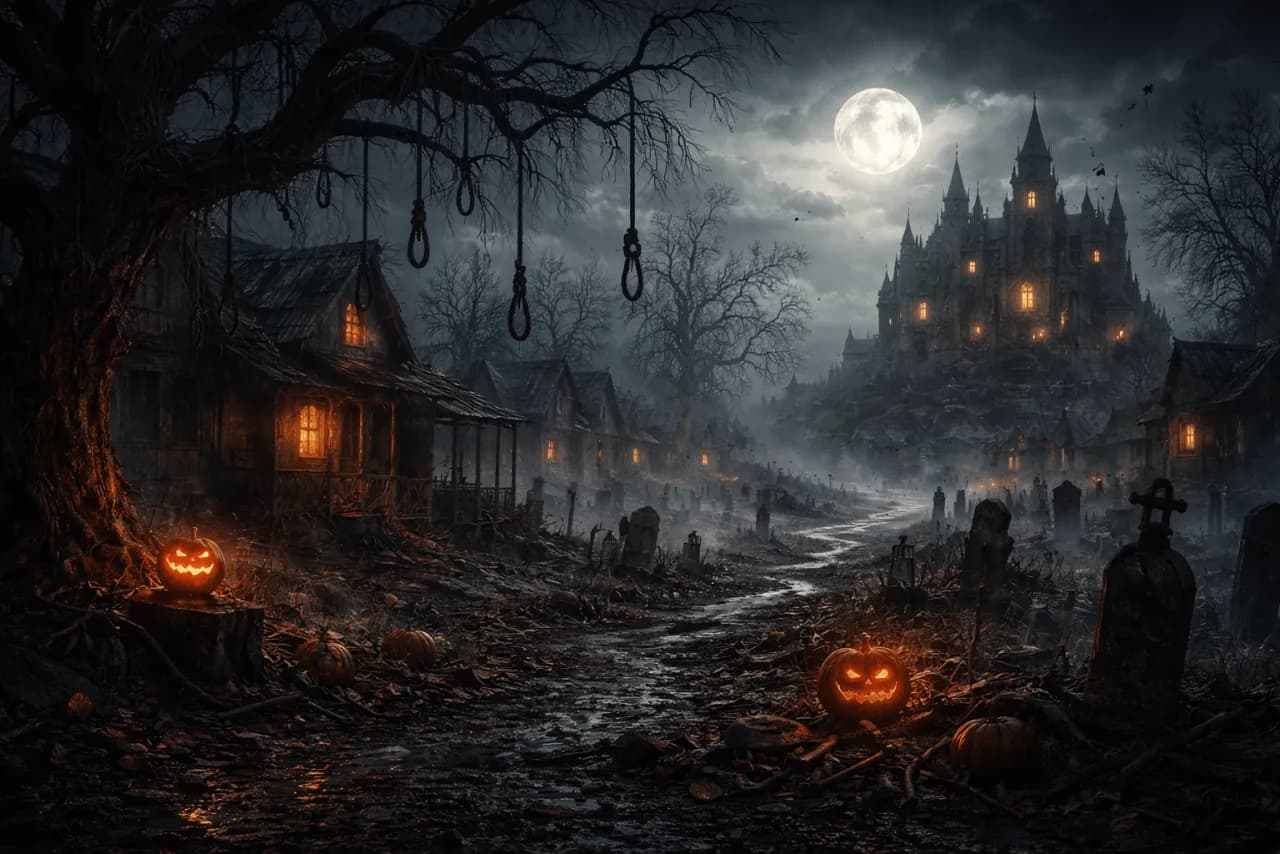
What is Horror Fiction?
Horror fiction is a genre designed to frighten, unsettle, and disturb. Its roots stretch back to Gothic literature of the 18th century, through the masterworks of Edgar Allan Poe and H.P. Lovecraft, to modern horror pioneers like Stephen King and Shirley Jackson. Horror's power lies in confronting our deepest fears: the unknown, death, loss of control, and the darkness that lurks beneath the surface of everyday life. It remains one of the most visceral and emotionally impactful genres in storytelling.
Key Elements of Horror Stories
Atmosphere and Dread
A pervasive sense of unease and tension that builds throughout the story, making ordinary settings feel threatening.
The Unknown
Mysterious forces, unexplained phenomena, and things lurking just beyond understanding that tap into primal fears.
Isolation
Characters cut off from help or safety, trapped in remote locations, abandoned buildings, or their own deteriorating minds.
Escalating Stakes
Danger that grows progressively worse, with each revelation more terrifying than the last.
The Monster
A source of terror that drives the conflict, whether literal or metaphorical: ghosts, demons, serial killers, or the darkness within.
Occupancy
Generated from the prompt “A house that appears on no map and belongs to no one”
The letting agent was apologetic about the boiler and said nothing about the seventh room.
There were six rooms. Nadia counted them on the viewing, counted them again on the day she moved in, and wrote six on the inventory form because that was how many there were.
In the second week she came home with shopping and stood in the hallway with the bags cutting into her fingers, looking at a door between the bathroom and the airing cupboard, in a stretch of wall she had walked past perhaps four hundred times.
She put the shopping away first. She was aware, doing it, that she was putting the shopping away first, and that this was a decision.
The door opened onto a small room with a window. The window looked out onto the garden. From the garden, later that evening, she counted the windows on the back of the house: kitchen, bathroom, her bedroom, the spare. Four. She went back inside and stood in the seventh room and looked out at herself standing in the garden.
She did not scream. She lifted a hand, slowly, to see what the woman in the garden would do.
The woman in the garden lifted a hand too, and kept lifting it, and went on waving long after Nadia had stopped.
Why this one works
Horror at short length works best when it refuses to explain, and this example never accounts for the room. The most effective choice is Nadia putting the shopping away first, with the narration flagging that she notices herself doing it. That single beat establishes a person managing her own panic, which is more frightening than a character who reacts correctly. The geometry does the heavy lifting: four windows outside, five inside, stated plainly without alarm. Plain statement is what sells impossible detail. The ending withholds the explanation entirely and gives a physical wrongness instead. The double keeps waving after Nadia stops, which means it is not a reflection, and the story ends before anyone has to say so. Ending one sentence early is nearly always the right instinct in horror.
How to Write Horror Stories
Withhold more than you reveal
Fear lives in the gap between what a reader is shown and what they infer. A described monster is a known quantity, and known quantities stop being frightening. Give the reader enough to build something worse than you could write.
Shirley Jackson's The Haunting of Hill House barely shows anything supernatural. The dread comes from architecture that is subtly wrong and a narrator whose grip is slipping.
Establish normal carefully before breaking it
Horror is a violation, and violations need something intact to violate. Time spent making the ordinary feel solid pays back with interest when it fails.
Stephen King spends a long time on the routines of a small Maine town before anything goes wrong, which is why readers feel the loss when it does.
Make the character's response the story
What frightens a reader is often not the event but watching someone rationalise, accommodate or fail to escape it. Denial is more unsettling to read than terror.
In Carmen Maria Machado's short fiction, characters frequently keep going through domestic routines while something intolerable happens alongside them, which is precisely what makes it intolerable.
Use ordinary detail as the delivery mechanism
Wrongness registers hardest when it arrives inside something mundane. A haunted castle is expected. A haunted airing cupboard is not.
Junji Ito builds many of his best sequences around domestic settings, so the horror has somewhere ordinary to land and nowhere for the reader to hide.
Common Horror Mistakes
Explaining the threat
Origin stories convert fear into information. Once the reader knows the rules, they are solving a problem rather than dreading one.
Weaker
The entity was the vengeful spirit of a woman murdered in 1847, bound to the house until her remains were given a proper burial.
Stronger
The house had been standing since 1847. Nadia stopped looking into it after the second afternoon at the records office, and could not afterwards explain why she had stopped.
Telling the reader to be afraid
Words like terrifying and horrifying announce the intended reaction instead of producing it. The prose should stay calm so the content can be alarming.
Weaker
A horrifying, blood-curdling scream echoed through the terrifying darkness of the abandoned house.
Stronger
Somewhere below her, someone screamed. It stopped rather suddenly, as though a door had been closed on it.
Characters behaving stupidly to keep the plot moving
If the reader is shouting at a character to leave, the tension breaks. Trap them with something plausible instead: money, obligation, disbelief, or a person they cannot abandon.
Weaker
Despite the bleeding walls, they decided to stay another night to investigate further.
Stronger
They had paid six months up front and neither of them had anywhere else to go, which is how most people end up staying somewhere they should not.
Horror Books Worth Reading
The Haunting of Hill House
by Shirley JacksonThe high point of ambiguous horror, and a masterclass in an unreliable narrator whose deterioration is the actual haunting.
The Shining
by Stephen KingDomestic dread and supernatural threat braided together, with an antagonist who was frightening before the hotel got involved.
Her Body and Other Parties
by Carmen Maria MachadoShort horror fiction that fuses body horror with everyday life, and shows how much can be achieved in very few pages.
The Fisherman
by John LanganCosmic horror told through grief and a story within a story. Patient, and worth studying for structure.
We Have Always Lived in the Castle
by Shirley JacksonHorror with almost nothing supernatural in it, built entirely from voice and the reader's slow realisation.
Uzumaki
by Junji ItoEscalation done with total commitment to a single absurd premise, and proof that a spiral can be made unbearable.
Horror Writing Questions
What is the difference between horror and thriller?
Thrillers generate tension from danger the protagonist can plausibly outrun or outsmart, and the reader's question is what happens next. Horror generates dread from something that cannot be reasoned with, and the reader's question is closer to what is happening. A thriller villain wants something; a horror threat often does not want anything you can negotiate with.
Should I show the monster?
Usually less than you want to, and later than you want to. Suggestion outperforms description because the reader supplies their own worst image. If you do show it, keep the description short and specific, and avoid returning to it repeatedly.
How do I write horror that is scary rather than just gross?
Disgust is a fast, shallow reaction; dread is slower and lasts. Gore tends to relieve tension rather than build it, because it resolves uncertainty. If you want fear, invest in anticipation, wrongness and the sense that the rules do not hold.
Does horror need a supernatural element?
No. Some of the most effective horror is entirely natural, driven by isolation, illness, other people or a character's own mind. What matters is the sense of threat that cannot be managed, not its source.
How can an AI story generator help with horror writing?
It works well for generating unsettling premises and variations you might not reach on your own. Be aware that models tend to over-explain and to resolve tension, both of which work against horror, so expect to cut the explanations and end the piece earlier than the draft does.
Horror Story Prompts to Try
Featured Stories
Read horror and other stories written here and shared by the people who made them, each published with the prompt that produced it.
Ready to face your fears? Try our horror story generator and create a terrifying tale in seconds.
Start Writing a Horror Story →